
Bulk Trash Day Secrets: Your Ultimate Guide to Decluttering & Curbside Treasure Hunting
It’s a familiar sight, isn’t it? One day your neighborhood looks normal, and the next, the curbs are lined with the ghosts of households past — a lumpy floral couch, a stoic-but-outdated treadmill, a wobbly bookshelf that’s seen better days. It’s the annual suburban safari, the great curbside migration.
Welcome to the magic of bulk trash day.
For some, it’s a day of liberation — a chance to finally reclaim the garage from that broken lawnmower and say goodbye to the armchair the cat destroyed. For others, it’s a treasure hunt — an opportunity to find vintage gems and upcycle another person’s “junk” into a DIY masterpiece.
But whether you’re decluttering your space or hunting for your next project, there’s a whole set of unwritten rules and insider secrets that can make the experience smoother, safer, and way more successful. Your city or borough posts the basic “do’s and don’ts,” but the real pro tips? Those are learned on the curb.
So, let’s pull back the curtain on what’s really going on — and how you can make the most of this chaotic, wonderful day.
What Exactly Is Bulk Trash Day? (And Why It’s Such a Big Deal)
Before we dive into the hacks, let’s get on the same page. Bulk trash day — sometimes called “heavy trash day,” “large item pickup,” or “spring cleanup” — is a designated day when municipal waste services will pick up items that are too large to fit in your regular trash bin.
Think of things like:
-
Furniture (couches, tables, mattresses)
-
Appliances (refrigerators, washing machines)
-
Carpet and rugs
-
Large electronics (though this is getting trickier — more on that later)
-
Grills and lawn equipment
The goal is to help residents dispose of cumbersome items properly and prevent illegal dumping. It’s a huge, coordinated effort that, when used correctly, is a fantastic community service.
For the Declutterer: Getting Rid of Your Stuff the Smart Way
There’s an art to placing your unwanted items on the curb. Doing it right not only ensures your stuff gets taken, but it also makes you a good neighbor and helps the whole process run smoothly.
Know Before You Throw: The Official Rules
First, the boring-but-essential part. Every municipality has its own set of rules, and ignoring them can result in your items being left behind with a sad little violation sticker. A quick search for “[Your Town’s Name] bulk pickup rules” is your best first step.
Generally, you’ll find rules like:
-
What’s NOT allowed: Most places won’t take hazardous materials (paint, chemicals, batteries), construction debris (drywall, lumber, concrete), or tires. Electronics are often a gray area, with many cities now requiring separate e-waste recycling.
-
Timing is everything: Don’t be that person who puts stuff out a week early, letting it get rained on and turn into a soggy eyesore. Most rules say to put items out the night before your scheduled pickup day.
-
Placement matters: Keep the sidewalk clear. Don’t block fire hydrants or mailboxes. Place items neatly on the grassy strip between the sidewalk and the street.
-
Appliance prep: Many towns require you to remove the doors from refrigerators and freezers for safety reasons.
The Unwritten Rules: Mastering Curbside Etiquette
This is where you go from amateur to pro. Following these unspoken rules helps everyone — from your neighbors to the treasure hunters.
-
Group like items together: Put all your scrap metal in one pile (old grills, metal shelving). Keep furniture in another. This makes it easy for scrappers and pickers to quickly grab what they’re looking for without making a mess.
-
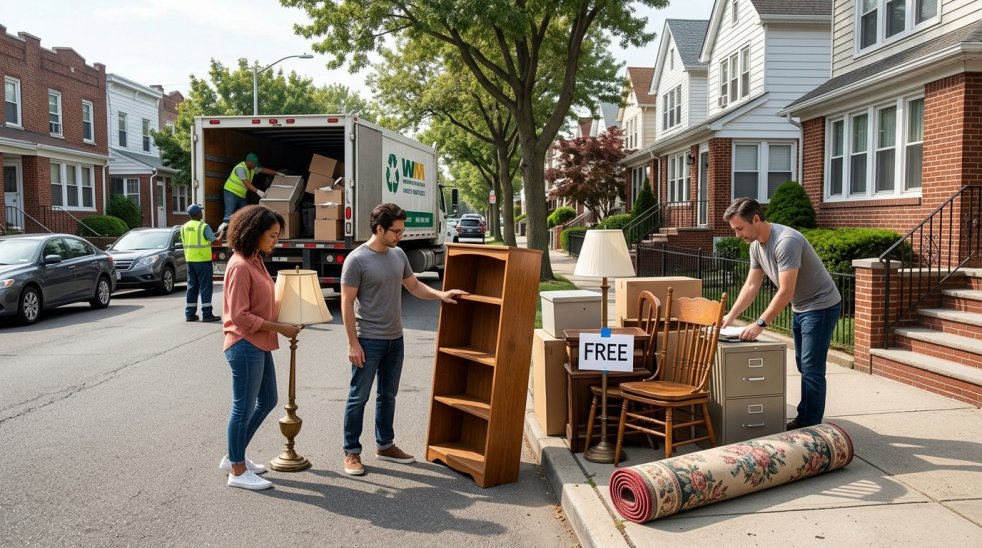
If it’s still usable, show it: If that bookshelf is just wobbly but not broken, stand it up. If a chair is fine but doesn’t match your decor, place it upright. You’re signaling that it still has life left in it. A simple “FREE” sign helps too.
-
Contain the small stuff: If you’ve got a box of old home decor or random items, put them in a cardboard box you don’t mind losing. Don’t just dump a pile of small things on the grass.
For the Treasure Hunter: A Guide to Ethical & Successful “Curb Shopping”
Alright, let’s flip the script. For the eagle-eyed, bulk trash day is the ultimate flea market — where everything is free. But “curb shopping” or “upcycling” comes with its own code of conduct.
The Thrill of the Hunt: What to Look For
You’d be shocked at what people throw away. Keep an eye out for:
-
Solid wood furniture: Dressers, nightstands, and tables made of real wood are often tossed because of a few scratches. A little sanding and paint can turn them into high-end pieces.
-
Vintage and retro decor: Old lamps, picture frames, and kitchenware can be hidden gems.
-
Scrap metal: Old grills, filing cabinets, and appliances can be turned in for cash at a local scrapyard.
-
Yard and garden gear: Planters, outdoor furniture, and even lawnmowers sometimes just need a little TLC.
The Treasure Hunter’s Code: Rules of Engagement
Want to hunt for treasures without being a nuisance? Follow the code.
-
Timing is key: The best times to go are the evening before pickup day (as people are putting things out) and early morning before the trucks arrive.
-
Be a ninja: Be quiet, especially at night or early morning. Don’t slam car doors or talk loudly. Use a flashlight, but don’t shine it into windows.
-
Leave it cleaner than you found it: The golden rule. If you look through a box, put everything back neatly. Never leave a mess.
-
Safety first: Always wear gloves. Watch for sharp edges, nails, and broken glass.
-
Know what to avoid: Be cautious with soft furniture like mattresses and couches — they can harbor bed bugs. If something smells musty or looks water-damaged, skip it.
The Big Secret Your Borough Wishes You Knew
So, what’s the one thing your borough really doesn’t want you to know? It’s not some deep, dark secret.
It’s this: Bulk trash day should be your last resort, not your first option.
Your town provides this service, but it’s expensive — fuel, manpower, landfill fees — it all adds up. They offer it because they have to, but they’d much rather you find another way.
The real “secret” is to tap into your local reuse economy:
-
Buy Nothing Groups: These hyper-local Facebook groups are awesome for giving away items to neighbors who actually want them. That armchair you hate? Perfect for a student’s first apartment.
-
Donation Centers: Goodwill, Salvation Army, and local thrift stores are great for items still in good shape.
-
Scrap Yards: Don’t just leave that old washing machine on the curb — a local scrap yard might even pay you for it.
By using these options first, you keep stuff out of the landfill, help your community, and save your town (and yourself) money. Total win-win.
Conclusion: One Person’s Trash, Another’s Treasure
Bulk trash day is more than just a city service — it’s a fascinating, temporary ecosystem of giving and taking, of letting go and starting fresh. It’s a reminder that “away” is a real place, and what we throw there matters.
By knowing the rules — both written and unwritten — you can handle the day like a pro. Declutter with care, hunt with respect, and always try to find a new home for your items before they hit the curb.
So next time the curbside treasures start to appear, what will you see — a pile of junk, or a world of opportunity?
Happy decluttering, and happy hunting.


